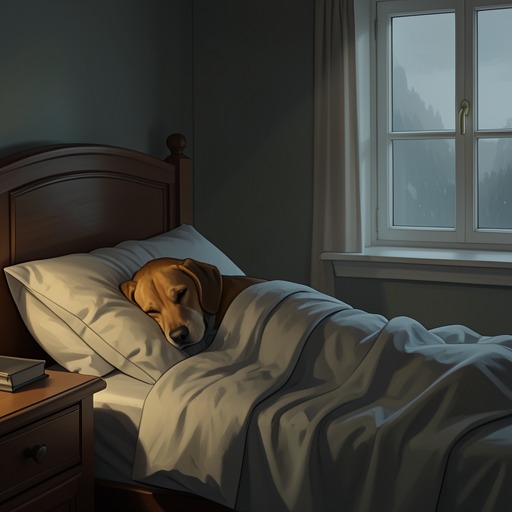
Angel dog
A Dog's JourneyAngel dog is CJ’s name for a beloved dog whose loyalty seems to reach beyond ordinary companionship. In its first use, the phrase is a question about how Max knew Trent had cancer; later, it becomes a declaration of recognition and a tender name for Toby. Its meaning gathers the dogs’ acts of protection and comfort together with CJ’s belief that love connects them across successive lives.
Meaning and First Recognition
CJ first applies the idea while sitting with Max on a warm summer day. He has run around and settled contentedly in her lap; as she strokes his head, she tells him she understands that his earlier behavior was not an attempt to say grace. She now reads it as an effort to alert the family that he could smell Trent’s cancer, which they did not understand at first. The scene gives the expression a specific circumstance: Max’s unusual warning helped bring a serious illness to human attention.
CJ’s questions preserve the uncertainty surrounding how Max knew. She wonders whether Molly told him, whether Molly speaks to him, and whether Molly is an angel dog watching over them. She then asks whether Max is one too. The words do not explain the dogs’ connection as a practical mechanism; instead, they give CJ a loving vocabulary for a bond she cannot otherwise account for. Her interpretation is rooted in a consequence she can name: the cancer was caught in time, had not returned, and Max had saved her husband. She asks Max to thank Molly for her, extending gratitude beyond the dog present at her side to the dog she associates with his warning.
From Question to Recognition
When CJ later calls Toby an angel dog, the phrase has moved from speculation toward recognition. She tells him that he comforts people and guides them at the end of life, and calls him a miracle and an angel dog. Toby’s response is conveyed through wagging rather than speech. The narrator explains that “angel dog” means something like “doodle dog”: both names tell him that he is good and loved. The expression therefore carries its emotional meaning in the relationship itself, not only in any claim about what dogs can perceive or do.
The name also belongs to a sequence of dogs rather than to a single exceptional act. When CJ comes to live at the hospice building, she is more ill than before, and Toby stays on her bed, moving between her head and her feet. As her voice grows weaker, she calls him a good dog and says he is an angel dog, “just like Max, just like Molly.” The comparison makes the phrase connective: CJ sees Toby’s care as continuous with the devotion she remembers from the earlier dogs. She tells him that she knows who he is, that he has always been with her, caring for her and guarding her from dangers.
Care, Memory, and Reunion
For CJ, the expression names more than a dog’s ability to detect danger. Max’s alert is one form of protection; Toby’s hospice work is another. His role is to comfort people and accompany them at the end, while his quiet physical presence beside CJ offers that care directly. The phrase can thus encompass an act that changes what happens to a person and a companionship that makes suffering less lonely. Calling Toby an angel dog recognizes both kinds of service without reducing his bond with her to usefulness: she also calls him a friend and tells him she loves him.
As CJ faces her own death, “my angel dogs” refers to Molly and Max, whom she expects to join. While sharing pieces of a ham and cheese sandwich brought by Eddie, she tells Toby that she is leaving, that she is weary of the bad things ahead if she prolongs her life, and that she wants to be with her husband. She says her principal regret is leaving her friends, counts Toby among them, and trusts that he will be loved and cared for. She asks him to be with her in her final moments so she will not be afraid, and asks him to tell the angel dogs that she is coming soon. The phrase now holds grief and reassurance together: separation from living friends is real, but CJ imagines reunion with the dogs she has loved.
Narrative Significance
The expression changes register across these scenes. It begins as CJ’s tentative question about Molly and Max, becomes her confident address to Toby, and finally names the dogs she hopes to meet again. That progression follows her growing recognition of Toby’s identity and of the care she sees as linking the dogs. The wording does not offer a technical account of their connection; it makes that connection speakable through affection, remembered protection, and gratitude.
At CJ’s death, Toby is beside her, with his head on her chest and her hand loosely stroking his fur. When her hand stops, Fran moves her chair closer and takes it; CJ gradually lets go of life and dies with a final breath. The ending gives the name its fullest emotional reach without making Toby a substitute for the people CJ leaves behind. He is her companion at the threshold, while the angel dogs are those she hopes to rejoin. Across the scenes, the phrase binds warning, care, recognition, and anticipated reunion into one intimate expression of what it means for CJ to be loved by her dogs.